Showing posts with label Dangerous. Show all posts

12/25/2011

Dimetrodon

0 nhận xét
Dimetrodon - ancestor of the mammals belonged to the family called Pelycosaurs, which had both mammal and reptile characteristics. Dimetrodon preceded the earliest dinosaurs by more than 40 million years but physically it looked a lot like one. It is often referred to as mammal-like reptile, based on characteristics of the skull and dentition. Dimetrodon was a dominant carnivore, the largest one of the Permian period. It was a predacious reptile that was on the top of the food chain during the early Permian.
This pelycosaur possessed a spectacular sail on its back, supported by long, bony spines, each of which grew out of a separate spinal vertebra. The sail was probably an early experiment in controlling body temperature. It is believed that the sail absorbed the heat of the sun and warmed the blood and body. It warmed up early after sunrise and cooled off more efficiently during the heat of the day. It may have also been used for mating and dominance rituals and making it look much larger than it was to predators. Dimetrodon had a large skull with two types of teeth (sharp canines and shearing teeth). It was probably quite slow because it walked on four side-sprawling legs.
Dimetrodon is one of the more recognized of the early reptiles..
TIME - 280 - 260 MYA, Early Permian period.RANGE - Russia, E. EuropeUSA Texas, Oklahoma.DIET - Smaller reptiles and other small vertebrates.SIZE - Up to 6ft (2m) long.

12/13/2011

Giant Isopods

0 nhận xét

Giant Isopods are just like some kind of little insects (see picture below), but only in a bigger format. These creatures are crustaceans (a mix between a crab and a shrimp). The Giant Isopod also called Bathynomus giganteus is one of the nine species of the genus Bathynomus. That live in the deep and cold waters of the Atlantic ocean. The Giant Isopod isn't a very lucrative business for fishing industries, because they are hard to catch and when they're brought to the surface they have already been scavenged by other fishes. However in Taiwan where they live much closer in shallow waters they're served in restaurants.

The Giant Isopod can reach a length between 19 cm and 37 cm with a maximum weight of 1.7 kg which isn't so great to be called gigantic, but if we compare these with other normal Isopods, then they are just enormous. The Giant Ispod has a kind of shield on his back with two antennas close to its head. It has 7 pair of legs also called (pereiopods) and one pair of these legs has as function to bring food to its jaws.

Giant Isopod
You see the resembles between the Giant Isopod?

Giant Isopods are deep sea creatures that scavenge at depths of 170m to depths or even 2200 meters. However they prefer to stay at middle depths of 300m to 700m. They love to scavenge dead whales, fish and even squids. It isn't only a scavenger, if its spots a sea cucumber, spunge or another little creature, then he won't hesitate and eat this creature. Living on these depths isn't a paradise. Therefore they could stay for more then eight weeks without any food. The deeper we go the bigger that these Giant Isopods are. Giant Isopods are living fossils, they haven't evolved for over 130 million years.

Giant Isopod

Giant Isopods lay eggs, the mature female develops a marsupium (brood punch) when she becomes  sexually active. The eggs that have been fertilized by the male Isopod will be stored in the marsupium for an unknown time and when the eggs hatch, then the miniature Isopods emerge from the marsupium as little clones.

Did you know that the eggs of the giant Isopod are the biggest ones of all the invertebrates?

12/12/2011

Pelican Eel

0 nhận xét

It is almost the end of the week and so far we have talked about birds, mammals and reptiles. I figured this would be a good time to head to the sea and look at an unusual animal that is hardly ever seen by humans. So grab your diving gear and a little bit of courage because we are going to the deep, dark depths of the ocean!
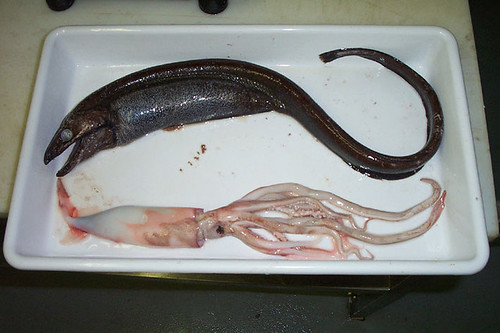
The Pelican Eel is related to the true eels (the ones that we probably familiar with), however, these deep sea eels have some major differences. Most notably has to be the size of this particular eels mouth. The pelican eel has a very large, hinged mouth that is capable of consuming fish much larger than itself. You can see the size of the mouth in the picture above. Actually, this eel received the “Pelican” portion of its name since the lower job resembles the pouch-like beak of a pelican. The most bizarre thing about their mouth is the fact that the pelican eel mostly feeds on small crustaceans. As a matter of fact, they have tiny teeth which are not consistent with animals which feed primarily on fish.
The other interesting feature of this eel is located at the other end of their body. The very tip of their tail happens to be a very complex organ with several tentacles. The cool thing about this organ is the fact that it will glow pink. Scientists presume this feature is to attract fish into the area so it can chomp away at them with their extremely over-sized mouth. Again, this is an odd behaviour for an animal that is suppose to feed on small crustaceans. I am starting to think there is something “fishy” about our understanding of this eel. It just doesn’t make sense to me why they have evolved a large mouth, an attractive tail yet have small teeth and are known to feed on small creatures. Maybe they are in the process of changing for whatever reason? Whatever their story is at least it is an interesting one for all of us to read about.
That just about does it for today’s deep sea adventure. I am glad everyone made the trip and had a safe adventure. See all of you tomorrow!

12/06/2011

Arctic Fox

0 nhận xét

The Arctic fox (Alopex lagopus) makes its home in small burrows in frost-free ground, often in low mounds, or in rock piles. Because the Arctic fox is a scavenger it can usually find food to eat. Sometimes the fox will follow Polar bears or other predators and feed off the remains they leave behind.


The Arctic fox is about 10 -16 inches long and weighs about 6-12 pounds. It is about the size of an ordinary domesticated house cat. It has short legs a long bushy tail that it uses as insulation by wrapping it around itself when sleeping. Its long hair is white in the winter, and "blue" or gray in the summer. Its head has a stubby muzzle, small ears, and large eyes. Its feet are lined with fur, which helps it conserve heat. The Arctic fox has adapted a stealthy movement due to its predatory nature.

Both male and female mature sexually at one year of age. The mating season is May-February and the gestation period for a pregnant female is 52 days. The number of pups born can range between 6-19, and the newborns weigh approximately 2 ounces. Whelps are helpless and blind when first born. They nurse until they can eat solid food. Both parents care for the pups. The mother raises the young while the father hunts for lemmings and other food. They start to eat solids after 6 weeks and leave the den after 14-15 weeks. The whelp is usually dependent on its parent from summer to fall. Mortality rates for young foxes is very high. An average life span for the arctic fox is around three years.
The Arctic fox is a solitary animal. Arctic foxes usually live to 15 years of age. It is an omnivore (one who eats both plants and animals). A typical diet of this fox consists of birds, eggs, small mammals and fish. It will also eat berries, seaweed, insects and larvae, when other prey is scarce. The Arctic fox is a predator to lemmings (one of it's favorite foods) and voles, among other creatures. The population cycles of lemmings and voles are largely dependent on the arctic fox. The fox is prey to wolves, polar bears and golden eagles. Because it is a scavenger, it keeps the environment clean by eating dead animals and keeping the rodent population down. The Arctic fox is a diurnal creature.
The Arctic fox has adapted to its environment by growing long fur that changes color with the season for camouflage. It tends to eat whatever is available. It s movements are stealthy due to lack of cover on the tundra. Its legs, ears, and muzzle are short to conserve heat, and uses its tail like a muffler when cold.
The Arctic fox is not endangered world wide and it is estimated that there are several thousand arctic foxes left in the wild. Two arctic fox populations are endangered, however. One in Russia has been reduced to around 90 animals because of a mange caused by ear ticks introduced by dogs. The second in Fennoscandia (Norway, Sweden, Finland, and Kola Peninsula) was caused by over hunting around the turn of the century. The total number of breeding pairs there is about 140.

12/04/2011

Scheltopusik

0 nhận xét

Although it might look like a snake, the scheltopusik is a legless lizard, and is sometimes known by its other name, the European glass lizard. The lizard grows to 1.35 metres and is usually tan coloured with a paler head and underbelly. It has two tiny legs, or leg stubs near its cloaca at the base of the tail.

Habitat:

European mainland to Central Asia. The scheltopusik prefers light woods, scrubby vegetation and rocky outcrops. Although it favours dry areas, it will come out after rain to hunt for snails and slugs.

Diet:

Snails, slugs, insects, eggs and occasionally very small mammals and birds.

Reproduction:

Females lay about 8 eggs some 10 weeks after mating. The eggs are often hidden in a crevice and guarded by the female. After about 50 days the young hatch and are 15 cm long.

11/05/2011

Common Tapeworm

0 nhận xét
Most people are not aware of the danger to their health posed by parasites; nevertheless, if one looks in the right places, one can find a lot of literature on the subject of parasites and the harmful effects they can produce.
Well over 80% of patients we check have some type of parasite or bacteria and the slight inflammation of the abdomen, and unrelated pains and aches which indicate the presence of parasites.

For instance, in a pamphlet put out by a medical manufacturer in America, we read: “Colon therapy has an anthelmintic action (this means parasites are removed). We find that over 90% of the people we examine in our clinics have some form of parasites. The most common of all are tapeworms. Our skilled technicians report seeing green, brown, grey, yellow and white ones, and various combinations. Patients report seeing pieces of tapeworm in the toilet bowl, varying from a few inches to a few feet. (The longest one reported was 57 inches.) Various other parasites are seen, including hook worms pin worms, whip worms and many other exotic forms. Tapeworms are usually beef, pork or fish variety.
Many Vegetarians also have various parasites. Their eggs may be eaten with vegetables or fruit. Thread worms and hook worms may pass through the unbroken skin - they are sometimes picked up when one walks through the grass."

In New Zealand, a large full page advertisement for "Combantrin” (a commercial worm preparation), shows a small girl handing a pencil to a classmate. The caption reads: 
“The simple act of passing a pencil, sharing a book, using the same doorknob, or even sharing a house with untreated adults is all that is required for parasites to spread - No matter how clean your child may be, and no matter how careful you are. The symptoms caused by parasites may include: Loss of appetite, anal and vulval itching and scratching, disturbed sleep, occasional bed-wetting in younger children. These may seem like common occurrences in childhood, but unfortunately this is because the parasite problem is a common one.”
We once told one of our patients that we thought her daily migraines were caused by parasites in her intestines. She was not surprised by this, and she said she had just returned from Europe where she had taken her children to a doctor. The children had been restless and had indigestion. The doctor told her that he felt the children had pin-worms, and it was the parasites which were causing the symptoms. She told the doctor that she thought it was impossible for her children to have parasites, as she insisted on the highest standard of hygiene. She had not seen any sign of worms in her children's clothes or in their beds. But, the doctor insisted, and told her that over 90% of people in that part of Europe had parasites of one kind or another - so she should not feel ashamed or surprised that her children also had parasites.

Our diagnosis was correct, and when she took the herbs, her migraines and other aches soon disappeared. Yet, this patient had been to a number of doctors, and none of them had been able to do anything to relieve her headaches.

In an interview recorded in a health publication, Dr. William Kelley, famous cancer specialist says:
“I find parasites in 92% of people. Everybody - rich and poor - the whole population have parasites. It is not restricted to lower classes at all. Pets are great carriers of parasites. Also, vegetables may carry parasitic organisms.

"One day I had a lady who was a little over 5 feet tall and weighed 300 pounds! She was on a 400 to 500 calorie diet and starving to death. I said to her, ‘You've got so many worms, all you're absorbing is the water!’

"This horrified her! Most people are upset at the thought of having worms. She started a bottle of special supplements I gave her, but nothing happened. So, she went to her family doctor who took a stool culture, but could not find anything.
“The lady decided to finish the herbs by taking it regularly as directed. One night she was lying in her bed, and she felt a tickling in her throat and thought it is mucous. She went to the bathroom and coughed it up, put it in a Kleenex 
and turned the light one. The scream she let out woke up her husband, and what they found in the tissue was the head and two more inches of a 
tapeworm which had come up in her throat. Lots of times, particularly in children, the tapeworm will come through the nose looking for some more to eat.
“Parasites mimic a lot of disease. Like heart trouble. I found this once in a nurse who had suffered with all kinds of heart trouble and went to doctors for years, whenever she had these heart spells. I said to her “You should have gone to the vet.” She asked why? I said, “Because you have heart worms.”
She took her herbs and never had any more trouble.

“Most stomach aches and colitis could have a parasite involvement. Liver damage and liver trouble can often be caused by worms. Sometimes a colony of worms will crawl up in the gall bladder and give you trouble. This can be the trouble with overweight people. The worms are being well fed. The body is only getting the water and the calories but a fraction of the nutrients.”

In a Nutritional Almanac printed by McGraw-Hill and reproduced in part below, we read "worms irritate the intestinal lining and therefore cause poor absorption of nutrients." 

Signs of worms may include diarrhea, hunger pains, appetite loss, weight loss and anemia.
In “The Miami Herald” dateline June 25, 1978 (just 23 years ago!) an article appeared titled “Worms Outrank Cancer as Man's Deadliest Enemy”. It reads:

“One of every four people in the world is infected with roundworms, which cause fever, cough and intestinal problems. A quarter of the worlds people have hookworms, which can cause anemia and abdominal pain. Another third of a billion people suffer from abdominal pain and diarrhea caused by whipworms.”

Not much research is being done on these diseases (i.e. parasite related diseases). The U.S. spends more than $US800 million a year on cancer research. All the nations in the world combined spend less than one twentieth that amount studying parasitic diseases.
Of the amount of money spent on Cancer research, one thing is agreed upon - that toxins and poisons in the body cause chronic irritation of tissues which results in cancer. There is also plenty of other evidence that cancer of internal structures such as organs or other tissues is caused by chronic irritation of the cells by toxins in the body.

Almost all the books written by (so called) “quacks” claim that cancer can be cured by cleansing the body and ridding it of parasites and toxins. In other words, once the tissues stop being irritated by excessive quantities of toxins in the blood, the cancer not only stops proliferating, but may actually disappear altogether if the treatment is started in time. (Note that only the medical profession attempts to treat cancer by introducing more toxic drugs to the body.)

AMOEBA, WORMS AND OTHER INTESTINAL PARASITES
Worms and Parasites
Hookworm
Hookworm attaches itself to intestines

Liver Fluke
Fluke suckers up to the linings of our organs
There are several types of parasitic worms which can live in human intestines, the most common being pinworms, tapeworms, hookworms, and roundworms.

Worms irritate the intestinal lining and therefore, cause poor absorption of nutrients. Signs of worms often include diarrhea, hunger pains, appetite loss, weight loss, and anemia. Diagnosis can be made by examining the stools, or occasionally by inducing the vomiting of worms. The extent of intestinal damage is then determined by the type of worm, the size of the worm, and the number of worms present.

Pin worms are the most common parasitic worm in the United States. The chief symptom of this small, threadlike worm is rectal itching, especially at night. Pinworms are transmitted when the eggs, which lodge under the fingernails when a person scratches, contaminate food. Personal hygiene is most important for the control of pinworms.

Tapeworms can be contracted from eating insufficiently cooked meats, especially beef, pork and fish. The most common tapeworm in the United States is the beef tapeworm, which can grow to a length of 15 to 20 feet in the intestines.

Hookworms are often found in the soil or sand in moderate climates. They can enter the body by boring holes in the skin of bare fee, or can enter the mouth if food contaminated by dirty hands is eaten.

Roundworms are most common in children. These worms can leave the intestines and settle in different areas of the body, causing diseases such as pneumonia, jaundice or seizures.

When a person is afflicted with worms, the body's supply of all nutrients is depleted to the point that supplementation of all nutrients is necessary to restore normal health. Nutrients of special importance are Vitamin A, the B complex, especially Thiamin, Riboflavin, B6, B12, and Pantothenic Acid; Vitamins C, D and K and Calcium, Iron and protein. 

Dietary DeficiencyAnimals kept on diets deficient in protein or vitamins A, B1, B2, Biotin, Folic Acid or other nutrients have been infested with many types of parasites, including trichinae, obtained from undercooked pork; and trichomonas, which can grow in the lungs or intestines as readily as in around the vagina. When these same parasites have been repeatedly implanted in healthy animals however, infestations have not occurred as long as the diet has been adequate.

If a deficient diet is not improved and the parasites are killed by medication, herbals or electro-medical means, re-infestation quickly occurs, but they gradually die out when the diet is made highly nutritious. Both parasites and worms infest animals deficient in Vitamin A, whereas well-fed controls remain free of infestation. The entire intestines may also be filled with worms when animals are allowed to eat too little of an excellent diet to obtain the nutrients they need, and if the worms are destroyed by medication, the animals died of infections in the intestines.

Although intestinal parasites are surprisingly common, there are no known studies showing the effect of dietary improvement on humans infested with them. It is known that a high intake of refined foods, particularly sweets, which supply little or no nutrient yet satisfy the appetite, cause individuals to 
become susceptible to pinworms which thrive on sugar.

Research indicates that in any type of parasitic infestation however, the diet should be unusually adequate and refined foods strictly avoided. Yogurt or acidophilus milk, or culture, appears to be specially helpful in cases of amebic dysentery and perhaps all intestinal infestations, and every effort should be made to maintain normal stomach acid which destroys many parasites obtained from food.

Other researchers have shown that parasites are particularly susceptible to a variety of herbs which are lethal only to these organisms. To date, there is no known “cure-all” herb which kills all stages of a parasites larvae and eggs. As described, poisons and toxins in the body irritate the tissues, setting the stage for cancer. These same toxins also seem to allow the parasites to breed outside of their normal, natural, life cycle which usually involves leaving the host's body. It seems that with the increase in environmental pollution, the parasites, in the presence of pollutants, can complete their life cycle within the host's body.

Any anti-parasitic treatment must effectively kill all stages of parasite development, and must continue on beyond the normal incubation period of the eggs. Any short term treatment, (such as commercial preparations are) - cannot be effective. Commercial treatments usually focus on intestinal parasites, and adult worms only. As has been described above, parasites can crawl into the liver, pancreas, brain, lungs, heart, eyeballs - in fact any 
part of the body. Therefore, a total systemic anti-parasitic system of treatment is imperative. Such a treatment may involve electro-medical devices which destroy the parasite electrically, and pure herbal supplements known to kill all stages of parasite development.

CONCLUSION

There are two trains of thought on the matter and cause of cancers, leukemia, fibroids, HIV AIDS, and other diseases which modern medicine has yet to find a cure.

One train of thought is that modern medicine has the means to cure disease by introducing toxic and potent drugs which are foreign to the physiology of any living body - human or animal. Or, surgically remove the diseased and suffering and dying organ.

The other train of thought is to harness the healing power of the body by removing the source of irritation, and providing nutrients for the body to build healthy new cells. By stimulating it with naturally occurring substances, such as are found in pollutant free, steroid free, hormone free, organically grown foods and herbs, and electricity - healing is naturally accomplished.

The Asian palm civet

0 nhận xét
The Asian palm civet is a smaller species of civet found throughout the jungles of Asia, and easily recognisable by its dark, coarse hair and large eyes. The Asian palm civet is also known as the common palm civet and the Toddy Cat is areas where the Asian palm civet is natively found.
The Asian palm civet is found inhabiting the tropical jungles and rainforests throughout much of Asia. The main populations of the Asian palm civet however are found in southern India, Sri Lanka, South-east Asia and southern China. Unfortunately, Asian palm civets have been drastically affected by increasing deforestation (and therefore habitat loss) in their native regions.
The Asian palm civet is widely spread and fairly commonly found throughout much of Asia and despite their cat-like appearance and behaviours, Asian palm civets are not felines at all but are in fact more closely related to other small carnivores including weasels and mongooses. Unlike other civet species the tail of the Asian palm civet does not have rings, but the face of this species is banded like that of a raccoon.
The Asian palm civet is solitary animal that only comes out under the cover of night to hunt and catch food. These nocturnal animals are primarily ground-dwelling and highly terrestrial as they mark their ranges by dragging their anal glands along the ground. Despite being predominately ground-dwelling though the Asian palm civet is known to climb up into the trees either in search of food or to hide from approaching predators.
The Asian palm civet is a carnivorous animal, and like other species of civet, it survives on a meat-based diet, supplemented by the odd plant or fruit. Small animals such as rodents, lizards, snakes and frogs make up the majority of the Asian palm civet's diet, along with insects and other small creatures scuttling through the under-growth. Asian palm civets are also known to eat the fruits and flowers of palms, mangos and coffee in their natural habitats.
Despite being a secretive yet relatively ferocious predatory animal, the Asian palm civet is actually preyed upon by a number of predators within their natural environment. Large predatory cats are the most common predators of the Asian palm civet including tigers and leopards along with reptiles such as large snakes and crocodiles.
The female Asian palm civet usually gives birth to up to 4 young after a gestation period that lasts for a couple of months. The babies are weaned by their mother until they are strong enough to fend for themselves. Asian palm civets can live for up to 20 years, although most rarely get to be this old.
Today, the Asian palm civet is under threat from deforestation and therefore drastic loss of much of its natural habitat. The main reason for such extensive deforestation in the area is either for logging or to clear the land to make way for palm oil plantations.

Common Kingsnake

0 nhận xét

While watching feeder birds this week at Hilton Pond Center, we noticed a movement at the edge of a gutter just above the observation window of the old farmhouse. We figured it to be one of our ubiquitous Eastern Gray Squirrels on one of its countless jaunts across the roof, but it was soon obvious that a serpent was making its way along the gutter.

Common Kingsnake, Lampropeltis getulus
All text & photos © Hilton Pond Center

A couple of Black Ratsnakes regularly climb the Flowering Dogwood trees that grow close to the farmhouse, and often they glide onto the roof on their way to hunting forays in the attic. (We're guessing that's why we never seem to hear the pitter-patter of little mouse feet overhead!) As the snake hung over the gutter, we noticed the first ten-inch segment of its body was the same width throughout; since ratsnakes have relatively wide heads and narrower necks, we now knew this was something different. While we watched, the snake continued to extend its body past the gutter's edge, eventually losing its grip on the smooth metal and falling about six feet to the wooden deck below. As soon as it hit the decking--unhurt by the quick descent--it was obvious that our new guest was serpentine royalty: a four-foot-long Common (or Eastern) Kingsnake,Lampropeltis getula.
Kingsnakes take their name from their ability to dominate other serpents; in fact, they eat them. The kingsnake apparently is immune to the bite of our North American pit vipers (Common Kingsnake, Lampropeltis getulus, headCopperheads, Water Moccasins, and rattlesnakes)--as well as that of Eastern Coral Snakes--and seems to have no trouble swallowing these elongated prey items even when they're a little longer than the kingsnake itself. Kingsnakes are constrictors, so they typically suffocate their prey before dining, whether they be birds, mammals, lizards, frogs, turtle eggs, or just about any vertebrate small enough for the kingsnake to ingest.
Common Kingsnakes are non-venomous and often fail to bite when first encountered, so we didn't hesitate to grab our visitor on the deck to study and photograph it. As we reached for the kingsnake, it vibrated its tail rapidly--a common response that reaches perfection among the rattlesnakes. This scare tactic didn't deter us, and we grasped the kingsnake tightly behind its head. With just as firm a grip, it wrapped its strong, sinewy body around our hand--probably not an attempt to constrict and kill us but rather to provide stability in an unfamiliar situation.
Common Kingsnake, Lampropeltis getulus, cloacaThe snake's next ploy was not unexpected, but it was unpleasant: out spewed a semi-liquid substance that undoubtedly is one of the vilest odors in nature. The smell--a mixture of musk and urine and feces--is indescribable, but once it has graced your olfactory nerves, you will never forget it. You also will wash your hands several times with perfumed soap after handling any snake that so anoints you. Most potential snake-eaters--including unnatural ones such as dogs and cats--are inclined to release any snake that "vents its spleen," especially if the predator gets a sudden mouthful.
This odoriferous material emanates from the snake's cloaca--the single opening through which solid and liquid wastes and reproductive cells must pass. In the photo at above left, the cloaca is the pinkish area on the snake's undersurface; normally the opening isn't nearly as obvious because it is sealed tight by scales that surround it. The cloaca also serves as a line of demarcation that helps one know whether a snake is poisonous or not--at least in North America. Common Kingsnake, Lampropeltis getulus, smooth scalesOn our non-poisonous snakes, all the ventral scales posterior to the cloaca (i.e., those to the cloaca's right in the photo)--are double, while those ahead of it are single; in the poisonous pit vipers, all the belly scales are single, from head to tail tip. We don't recommend that you go around lifting snakes by their tails to see if they might be poisonous, but this tidbit of information may help put your mind at ease when you wonder whether any dead snakes brought in by Rover or Fluffy were venomous. (Caveat: The venomous Eastern Coral Snake has a double row of caudal scales, but this species doesn't occur in the Piedmont.)
Except for its pungent cloacal fluid, the Common Kingsnake we caught at Hilton Pond Center was quite dry, but it was almost slick to the touch; unlike rough-skinned snakes, the kingsnake's scales are unkeeled and smooth as glass (above right). This may be an adaptation that allows the kingsnake to glide more easily through small holes as it searches for prey. We imagine such hole-crawling happens a lot in the life of an Common Kingsnake, since individuals are known to live nearly 30 years and reach lengths of almost six feet.
After taking our close-up photos, we placed the kingsnake on the ground, where it formed into a tight ball (below left). This behavior may be another defensive mechanism, or may simply be the safest thing to do until the snake gets its bearings; it even stayed in a ball temporarily when we rolled it over on its back to photograph the ventral side (below right). Incidentally, the yellow-white markings on the dorsal surface of the serpent reveals why the Common Kingsnake is sometimes called "Chain Snake."
Common Kingsnakes occur in more temperate regions of the U.S. from coast to coast, but the seven subspecies have very different markings or lack them altogether. A related species, the secretive Mole Kingsnake, L. calligaster, occurs in the Carolina Piedmont, as does the Scarlet Kingsnake, L. triangulum--famous as a mimic of the Eastern Coral Snake. (The Scarlet Kingsnake also occurs in a brown form that is more often called the Eastern Milk Snake.)

Common Kingsnake, Lampropeltis getulus, dorsal view.Common Kingsnake, Lampropeltis getulus, ventral view

Back on the ground, our Common Kingsnake finally got oriented and--perhaps tired of our handling--assumed a strike posture. We zoomed out a little with the camera's telephoto attachment and dropped low to get a snake's eye view (see top photo). The serpent lunged toward us a few times, but thanks to the telephoto and our surprisingly quick reflexes, it never quite got all the way to the camera lens. As we finished our photo work and backed away, the kingsnake sensed an opening and slithered off into nearby shrubbery.
We hope our "king of snakes" doesn't go very far and that it remembers how it got onto the farmhouse roof; you never know when the ratsnakes might go on strike and require us to call in the kingsnake clan to keep the small rodent population under control at Hilton Pond Center.

Steller's Sea Eagle

0 nhận xét

These very large, powerful eagles are also striking in appearance. They are dark but dramatically colored with white tail, shoulders, rump, thighs and forehead.
These eagles are believed to breed only in far eastern Russia, along the coasts and surrounding islands of the Sea of Okhotsk and Bering Sea. They are most common on the Kamchatka Peninsula.
Each winter, many Steller's sea eagles migrate from their breeding grounds to Japan, and a few reach Korea or even farther afield. Other individuals do not migrate, but simply move to open water as winter approaches.
Open water provides these eagles with their main food sources along coastlines and lakes. In their breeding grounds, Steller's sea eagles subsist largely on salmon, and they both hunt and scavenge for this resource. Annual salmon runs provide an enormous bounty and Steller's sea eagle nests are typically located near coasts and rivers where these fish appear en masse.
These birds of prey hunt from a perch or from flight by diving and clutching prey in their talons. They also stand in shallow water or on the ice and grab passing fish when the opportunity arises. Like other eagles, Steller's also steal food from other birds.
In Japan, Steller's sea eagles feast on cod. In addition to fish, they eat crabs, shellfish, squid, small animals, ducks, gulls, and carrion.
Steller's sea eagles do not occur in large numbers, but their populations appear to be stable. Their feathers were once highly prized, but today these magnificent birds are protected throughout their range. They are especially revered in Japan, where they are known as O-washi.

Elf Owls

0 nhận xét
Elf Owls (Micrathene whitneyi) are very small Owls that live in the southwestern United States and Mexico. Their habitats include riparian woodlands, brushland, and desert. Nests are often built within old Woodpecker-created cavities, and are found in either trees or large, saguaro cacti. They are nocturnal birds, and possess excellent eyesight and hearing.

Elf Owls are one of the smallest of the Owl species, growing to about the size of a sparrow. They measure about 5in (13cm) long, and sport a 9in (23cm) wingspan. Elf Owls have rounded heads with no ear tufts, and sport greyish-brown plumage and white "eyebrows." They are also identified by their distinctive vocalizations.

Due to their size, Elf Owls hunt only very small prey- almost exclusively arthropods. They do most of their capturing while in mid-flight, as they are very agile flyers.  Prey is then brought back to a perch, torn apart, and consumed.  Elf Owls themselves have numerous predators, including other Owls, Coyotes, and Snakes. They built their nests as high up as possible in order to keep away from danger.

Loss of Habitat has decreased the population in some areas, and the Elf Owl is now listed as endangered in the state of California. Reintroduction efforts have been ongoing throughout their range.
0 nhận xét
The Cheetah (Acinonyx jubatus) is the only living member of it's genus and is found in populations across east and south Africa, though they historically had a much wider range that spread throughout Asia. Other, now extinct members of the genus, including the Giant Cheetah, spread into Europe as well. Cheetahs have long, slender bodies, and are smaller in size than many other big cats. Their top weight is around 140lbs (64kg).

Leopards, Jaguars, and Cheetahs are all spotted big cats, but Cheetahs are easy to distinguish based on their body shape. They possess deep chests, long legs, and small heads that sport two well defined black "tearmark" streaks that run from the eyes to the snout. The physical features of the Cheetah all serve to enhance their speed and hunting style. For example, they have claws that only partially retract and serve as "cleats" forrunning traction. Their small heads also have small teeth that allow for larger nasal passages and easier breathing while on the hunt and while in recovery from a chase.

Cheetah Family
Cheetahs are the fastest of all land animals, and also have the unique ability among big cats of being able to turn in midair. They are able to sprint to speeds of up to 70mph (112kph), but can only maintain these chases for a short distance before they get over-exerted. Only about half of all chases result in a successful kill, and they cost the Cheetah a tremendous amount of energy. If prey is caught, the Cheetah kills them by clamping over the mouth and suffocating them. The cat must them consume the meal quickly before larger predators arrive and try to scavenge. One Cheetah fact that I found particularly interesting is that they only need to drink every three or four days!

Female and Male Cheetahs mix only to mate. Females give birth, typically to a littler of three, and those cubs will stay with her for about a year and a half, learning to hunt and survive. Males Cheetahs often live in small groups, typically with their brothers.

Cheetahs are listed as Vulnerable, and it is estimated that there are around 12,000 left in the wild. Habitat loss, human encroachment, loss of prey, and loss of genetic diversity are all threats to the species.

Oriental Fire-bellied Toad

0 nhận xét
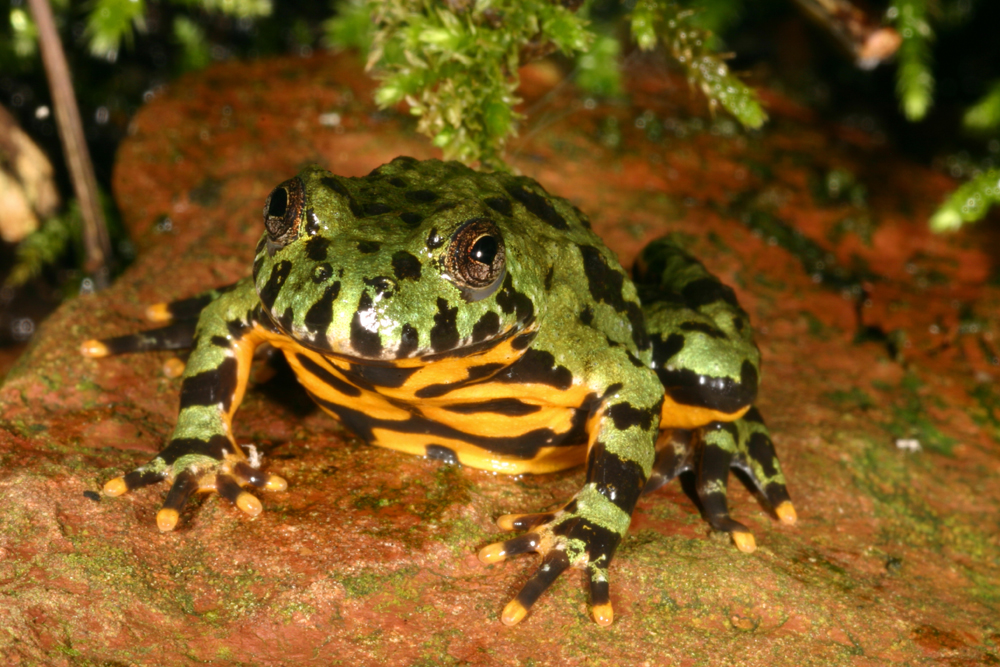
Oriental Fire-bellied Toads are aquatic amphibians that cane be found in China, Korea, Japan, and parts of southern Russia. They are referred to as Toads not because they belong to the Toad family, but because they have warty, toad-like skin. Isn't animal naming confusing sometimes?

On any normal viewing, the Fire-bellied Toad will appear green with a black mottle pattern. However, once they are threatened they will rise on their hind legs and present their smooth, bright red and black underside to the predator, sometimes doing a near back-flip in the process! The red color warns against the dangerous toxin that the Toad secretes from its skin.

Oriental Fire-bellied Toads are very common throughout most of their range, and they are also kept as pets in captivity. They are very hardy, require only a 10 gallon aquarium, are considered to be suitable for beginning Frog keepers, and can live ten years or more!

IUCN Status : Least Concern
Location : East Asia
Size : Length 2in (5.5cm)

Spotted Towhee

0 nhận xét
Spotted Towhees are actually large members of the New World Sparrow family, and can be found in the western parts of North America. They have striking red sides, with dark wings and tails that are spotted with white. Males are darker in color than the females

Male Spotted Towhees are very dedicated when it comes to finding a mate. Those who have not yet attracted  females will spend 70-90% of their entire morning singing their little hearts out.  Once they find a mate, only about 5% of their morning time is devoted to song. Due to their scrubland environment, nests are built by the female on the ground using things like pine needles, bark, and grasses. Eggs incubate for only two weeks, and the young are out of the nest when they are only 12 days old!

Spotted Towhees not only nest on the ground, but they feed there as well. They have a very distinctive foraging technique that is referred to as "two-footed scratching." They kick both of their feet back simultaneously to scratch and forage for seeds, insects, and nuts. The sound is actually pretty loud, and the birds are often heard before they are seen.

Moustached Tamarin

0 nhận xét
We've all heard about the American and European Beavers, the large rodents that use their exceptional engineering skills to dam up and control watery ecosystems. But have you heard about the Mountain Beaver? Yes! This is a real animal! They live in the Pacific Northwest and are incredibly elusive. And they aren't even really Beavers!

Despite what the common name might suggest, Mountain Beavers don't always live in the mountains. They live in the coastal forests of British Columbia, Oregon, Washington, and California. They are called Beavers because they chew at bark just like their larger, distant cousins.

Mountain Beavers are considered to be the world's most primitive living rodents. They are the only members of their genus and family, and can be traced back 40 million years. Ready for another weird fact? Mountain Beavers are host to the world's largest flea which measures .3in long! 

The Mountain Beaver population is healthy, and the animals are active little herbivores year round. However, they do live in extensive underground burrows and are rarely seen. With their underground lifestyle, elusive habits, and interesting back-story, it's no wonder many people think their a myth right up there with the Jackalope!

Short-Beaked Echidna

0 nhận xét
The Short-Beaked Echidna is one of the most bizarre mammals in existence. It, along with four other Echidna species and the Duck-Billed Platypus, are the world's only living Monotremes. Monotremes are considered to be very primitive mammals, in that they lay eggs in order to reproduce. All other mammals practice placental birth. There has been some arguement about where Monotremes should be placed taxonomically. Some consider them to be a separate, sister class to mammals, while others believe them to be reptiles (due to additional similarities in the digestive and excretory systems). Currently, they are placed as an Order within a separate subclass within Mammalia.


The Short-Beaked Echidna (Tachyglossus aculeatus) is found throughout Australia and parts of New Guinea. There are five different subspecies that inhabit various ranges throughout. Within their range, the Short-Beaked Echidna  lives in a multitude of different habitats, ranging from mountain areas to deserts, and everything in between. They are even able to tolerate snow and cold weathers. They prefer to live in burrows, favoring fallen logs, caves, or even self dug burrows in the ground.

Short-Beaked Echidnas have clawed front feet that are exceptional for digging. These feet also help them to locate their favorite meals - ants and termites - so that they can slurp them up with their long tongues. Short-Beaked Echidnas have no teeth. Their bodies are covered with spines, interspersed with hair. These are used for defense. Short-Beaked Echidnas have compact, muscular bodies, and are able to roll up into a ball that is extremely difficult for predators to penetrate. They have wonderful senses of smell, but poor eyesight. Short-beaked Echidnas are warm blooded, and they do in fact produce milk for their young.

Short-Beaked Echidnas are typically very shy, solitary creatures, and will only come together to mate. After mating, the female will lay a single eggs, which is incubated in a pouch until hatching. The baby (unofficially called a puggle!) will remain in the pouch (similar to marsupials) until it's spines begin to grow. At that point it is raised in an external burrow. Short-Beaked Echidnas are the only Monotremes that are commonly found within captivity. They have also been bred in captivity.

Velociraptor

0 nhận xét
In 1993, a film called Jurassic Park was released that thrust the Velociraptor into the forefront of our collective Dinosaur fascination. Unfortunately... its depiction was pretty darn wrong. Granted, that wasn't wholly the fault of the movie-makers, because one of the primary physical characteristics of the Velociraptor wasn't even discovered until several years after the film's release. But the other major discrepancy... yeah, that one is probably on them.


There are two species of Velociraptor, and both lived in what is now Central Asia. In 1998, a forelimb from one specimen was found that contained some interesting features. There are marks in the bone known as quill knobs. This revelation points to the fact that Velociraptors definitely had feathers. Velociraptors could not fly, but they probably used their feathers for maneuverability, display, and for temperature control. And guess what? They were probably warm blooded

The other physical trait that the movie got wrong? The size. You see, Velociraptors probably weighed no more than 30lbs, and had a height of about 3 feet. They did at least have those large, terrifying claws, which they used to attack and kill their prey, and one of their favorite meals was the Protoceratops. Velociraptors lived during the late Cretaceous period.